01
Understand the opportunity
Review the race, your selection and the available odds. Check the place fraction and qualifying positions before deciding whether the offer deserves a closer look.
Discover the Each-Way Betting Strategy Designed to Maximize Profits While Reducing Risk.
Bring a little more strategy to the starting line. Explore each-way value, understand the place terms, and make every decision with a clearer view of risk.
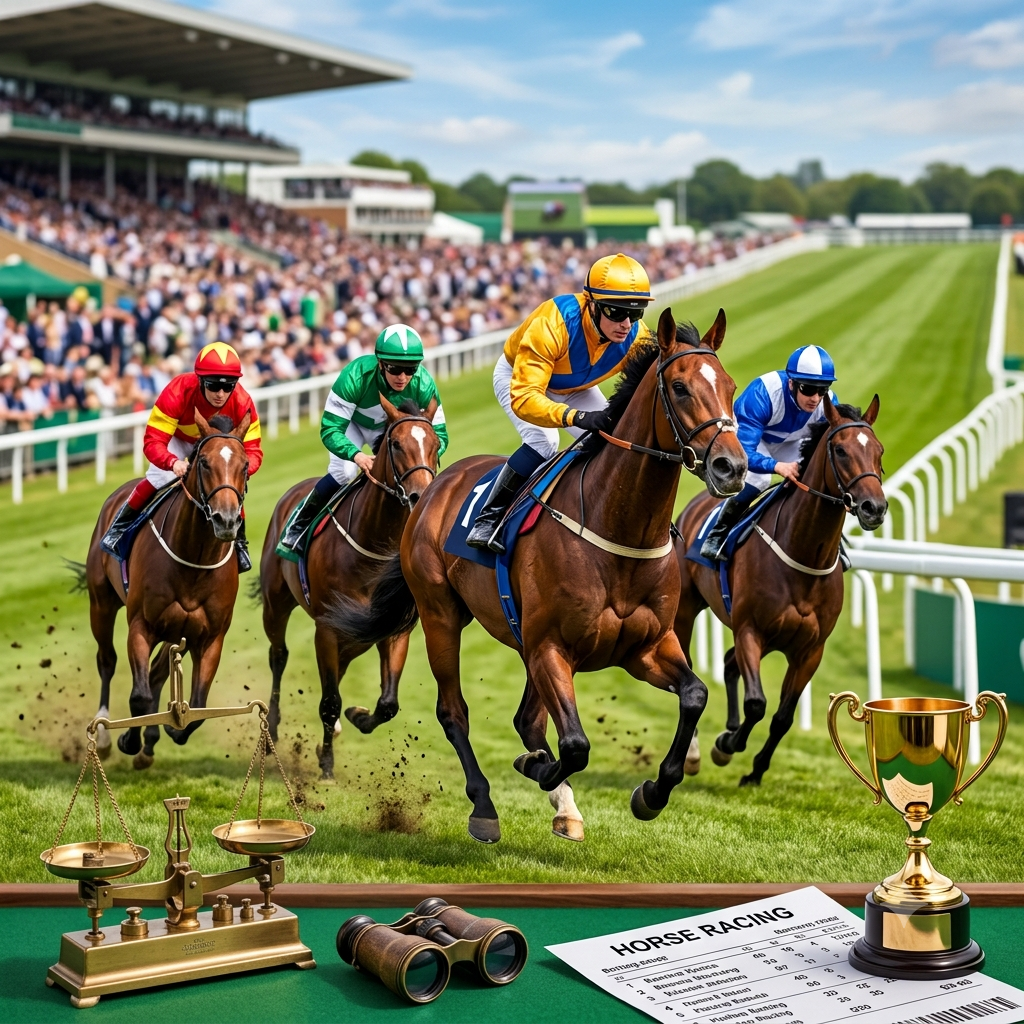
 Illustrative imagery · not a performance forecast
A good betting decision starts long before the horses reach the finish line.
Each-Way Multiplier is about taking a more considered view of an each-way opportunity: the selection, the odds, the place terms and the full amount at risk. It brings the conversation back to process, rather than the thrill of a single result.
Explore a framework that encourages you to ask better questions, compare the complete offer and keep your bankroll boundaries in sight. There will always be uncertainty. The goal is to approach it with more clarity.
Get to know the principlesNo shortcuts. Just a repeatable way to evaluate what’s in front of you.
Review the race, your selection and the available odds. Check the place fraction and qualifying positions before deciding whether the offer deserves a closer look.
Calculate both parts of the each-way stake. Consider each possible settlement and keep the full outlay within a budget you can genuinely afford to lose.
Record the decision and the result. Look for consistency in your process rather than chasing losses or treating a single win as proof of long-term success.
Give your process as much attention as your selection.
An each-way approach creates two settlement possibilities, but it also creates two stakes. Understanding both is what makes the difference between a tempting price and a properly considered decision.
 Growth graphics are illustrative. Returns are not guaranteed.
A practical introduction to each-way betting, value and responsible bankroll management.
An each-way bet brings together two separate wagers on the same selection: one for the horse to win, and another for it to finish in a qualifying place. That structure is the starting point for the Each-Way Multiplier approach. Rather than thinking only about the winner, you consider how the available odds, the place fraction, the number of paid places and the total stake work together. A placed horse can return money even when it does not win, but that does not automatically mean the overall bet has made a profit. The return depends on the terms and on the cost of both parts of the wager. Understanding that distinction is essential before placing anything. This page introduces the reasoning behind a more deliberate betting routine, not a promise of easy income. The aim is to make your decisions clearer, help you recognise unsuitable opportunities and give risk the same attention as potential reward. You should always read the bookmaker’s current terms before committing a stake.
A stake described as ten units each way normally means ten units on the win and ten units on the place, for a total outlay of twenty units. This is a simple point, yet it changes how you judge every possible return. If the horse wins, both portions may settle successfully under the applicable terms. If it only places, the win portion loses while the place portion settles at the stated fraction of the win odds. If it finishes outside the qualifying positions, both portions lose. Keep the full outlay visible in your notes rather than recording only the stake on one side. Doing so makes it easier to compare bets fairly and prevents you from overstating the value of a place return. Any example should include the original stake, the returned stake where applicable, and the net result after the total outlay. A disciplined approach begins with accurate arithmetic, not with a persuasive headline or the excitement of a long-priced selection.
Place terms are not a small detail beneath the odds. They determine which finishing positions qualify and how much the place portion can return. Terms can differ between races, bookmakers and promotions, and they may be affected by the number of runners that actually start. A larger field does not always mean a better bet, and an extra place does not make every selection attractive. Look at the fraction of the win odds being offered alongside the number of places paid. Then compare that complete offer with the alternatives available to you. Check whether an advertised offer requires an opt-in, has a stake restriction or excludes particular markets. Non-runners can change both the field and the settlement rules, so revisit the terms if the race changes. The useful habit is to slow down before the bet, not to discover these conditions after the result. Clear terms make a selection easier to evaluate; unclear terms are a reason to pause.
A horse can be a plausible winner and still represent poor value at the available odds. Equally, a less obvious runner is not automatically a value selection simply because the potential return is larger. Value is about the relationship between the price and a realistic assessment of the outcome, including the chance of qualifying for a place. Those chances are uncertain, and your assessment can be wrong. Review relevant race information without treating any single factor as decisive. Recent form, race distance, ground conditions, field strength and the horse’s suitability for the race can all inform your thinking. The point is not to collect enough reasons to justify a bet you already want to make. It is to ask whether the evidence supports the price and whether the place terms strengthen or weaken the overall proposition. Passing on a race is a legitimate decision. A strategy becomes more useful when it helps you reject weak opportunities as well as identify interesting ones.
A bankroll is a defined amount set aside for gambling that you can afford to lose without affecting bills, savings commitments or everyday needs. It is not a target you must grow, and it should never be funded with borrowed money. Decide on that boundary before looking at a racecard. Then set a stake rule that keeps individual wagers small enough that a losing sequence does not push you into rushed decisions. Because an each-way bet has two parts, apply your rule to the complete outlay. A consistent approach is easier to review than one that changes according to excitement or frustration. If your available budget is exhausted, stop rather than increasing it to recover losses. You can also set a time limit so that research and betting do not take over your day. These boundaries do not eliminate financial risk. They help keep that risk visible and prevent the idea of a strategy from becoming permission to spend more than intended.
A useful routine separates research, evaluation and execution. Begin by reviewing the race and deciding whether it fits the kind of opportunity you understand. Next, compare the available win odds and place terms, calculate the total stake and consider each settlement outcome. Only then decide whether to proceed. This order helps prevent an attractive headline price from dictating the rest of your thinking. Record why you accepted or rejected the opportunity while the decision is still fresh. Short, specific notes are more useful than a lengthy explanation written after the result. You might note that the place fraction was less favourable than expected, that a non-runner changed the race or that your confidence depended too heavily on one piece of form. The Each-Way Multiplier concept is most constructive when treated as a framework for deliberate decisions. It should not be interpreted as an instruction to bet on every meeting, increase stakes automatically or ignore conditions that no longer suit your original assessment.
A betting record should include the date, race, selection, bookmaker, odds, place fraction, qualifying places and total amount staked. After settlement, add the full return and the net profit or loss. Keep any deductions, voided stakes or changes to terms in the same record so that your totals remain understandable. Looking only at winning bets creates a distorted picture, and counting a place return as profit without subtracting both stakes does the same. Review your record across a meaningful run of decisions rather than reacting to one memorable race. A positive short-term result does not establish that your process has an edge, just as a losing result does not explain every weakness on its own. Use your notes to check whether you followed your rules and whether your reasoning was consistent. If the record shows that the approach is costing more than you are comfortable losing, the appropriate response may be to reduce activity or stop altogether, not to chase a turnaround.
Horse racing is dynamic. A withdrawal, a change in going or a movement in price can alter the opportunity you first assessed. Before placing a wager, check that the conditions on which your reasoning depends are still present. After placing it, understand that deductions or revised settlement terms may apply according to the bookmaker’s rules. Do not assume that an earlier screenshot of the market guarantees the eventual settlement. Compare like with like when considering alternatives: a higher win price with a weaker place fraction can have a different profile from a lower price with more favourable place terms. Promotions also need context. An extra place can be useful, but it is not a substitute for evaluating the selection, the full stake and the restrictions. This is why a considered routine leaves room for a final check. The strongest habit is not speed; it is noticing when new information makes your earlier conclusion less reliable and being willing to step back.
Each-way betting spreads a wager across a win outcome and a qualifying-place outcome, but the two wagers are linked to the same horse. They are not independent investments, and both can lose together. A place return may soften a loss in some circumstances, while the additional place stake can increase the amount lost in others. Risk therefore has to be considered at the level of the full bet and the full bankroll. The phrase “reducing risk” on this page describes a goal of better decision-making, clearer exposure and more disciplined staking. It does not mean that the product can remove uncertainty or guarantee profitable results. Likewise, the growth imagery is illustrative rather than evidence of actual performance. No chart on this page represents verified earnings. If you are looking for dependable income, gambling is not an appropriate substitute. Approach the material as educational guidance, and judge any further product claims carefully before deciding whether the service is suitable for you.
This approach may interest adults who already understand the basics of horse racing and want to bring more structure to how they evaluate each-way opportunities. It is especially relevant if you find yourself choosing selections without checking the place fraction, overlooking the total outlay or reacting too strongly to the last result. A slower, documented process can help reveal those habits. It is not suitable for anyone under the legal gambling age in their location, anyone using money needed for essential expenses or anyone hoping to recover previous losses through a new system. You do not need to place a bet to learn from the framework. You can examine race terms and calculate hypothetical outcomes without committing money. If you decide to explore the product, read the current information on the official website and check what is included before ordering. This page does not assert that particular tools, selections, support arrangements or performance results are included; the official product details should guide that decision.
Before considering an each-way bet, ask a few direct questions. Do I understand the race and the reason for this selection? Have I checked the actual number of paid places and the fraction of the win odds? Have I calculated the full cost of both wagers? Do I know what a win, a place-only finish and an unplaced finish would mean for my net result? Is the stake within my pre-set budget? Am I making this decision because of the current opportunity rather than because I want to repair an earlier loss? If one of those answers is unclear, wait. You can also compare the offer with another bookmaker, provided you compare all the terms rather than just the headline odds. After settlement, record the result honestly and return to your original limits. This checklist is deliberately straightforward. Consistency usually depends on a small set of habits repeated reliably, not on a complicated explanation that becomes impossible to follow when a race is about to start.
Betting should remain an optional form of entertainment, not a financial obligation or a measure of personal success. Take breaks, set limits and notice whether your behaviour is changing. Warning signs include hiding the amount you spend, borrowing to gamble, increasing stakes after losses or feeling unable to stop thinking about the next bet. If those patterns appear, stop betting and seek support from an appropriate gambling-support service in your country. Bookmaker tools such as deposit limits, time-outs and self-exclusion can help establish stronger boundaries. Consider talking to someone you trust as well. No strategy is more important than your wellbeing, and buying a product should never be presented as the answer to gambling harm. The Each-Way Multiplier landing page encourages informed evaluation rather than urgent action. Explore the principles at your own pace, read the official product information carefully and only proceed if you are legally eligible and comfortable with the possibility of losing the full amount you stake.
Get clear on the basics before you decide to take the next step.
It is two wagers on one selection: a win bet and a place bet. The place portion pays only if the horse finishes in a qualifying position under the bookmaker’s terms. The total stake includes both portions.
No. Betting involves uncertainty and you can lose the full amount staked. The strategy’s focus on potential value and disciplined decisions is not a guarantee of profits or protection from losses.
No. A place return must be compared with the total cost of the win and place stakes. Depending on the odds and place fraction, a placed horse can still produce an overall loss.
Use any Order Each-Way Multiplier button on this page to visit https://eachway-multiplier.com. Review the current product details, eligibility and purchase terms on the official website before ordering.
Yes. Read the guide, compare published race terms and calculate possible outcomes on paper. You can explore the decision-making framework without staking any money.
Only gamble if you meet the legal age requirement in your location. Set affordable spending and time limits, never borrow or chase losses, and stop if gambling affects your finances or wellbeing.
Explore Each-Way Multiplier on the official website.
Read the details, understand the approach, and decide if it’s right for you.